
The ongoing India vs England Test series in 2025 has put cricket balls under the spotlight for all the wrong reasons. After the second Test in Birmingham, both teams had complained about the Dukes ball losing shape too quickly. During the first Test in Leeds, Rishabh Pant was even penalized with a demerit point for throwing the ball away in frustration after an umpire denied a request for a ball change.
The controversy reached its peak during the Lord’s Test when The situation escalated when the replacement ball chosen by the umpires failed to impress both Gill and fast bowler Mohammed Siraj. The Indian skipper was visibly seen questioning umpire Sharfuddoula over the selection, while Siraj appeared to mock the ball’s condition before play resumed.
Even cricket legends have weighed in, with England bowling legend Stuart Broad felt it was unacceptable to see the frequent change of the Dukes ball during the ongoing England versus India Test series. What’s particularly shocking is that India were unhappy with the replacement ball for the second new ball, incredibly just 10.3 overs into its life on the second morning of the Lord’s Test.
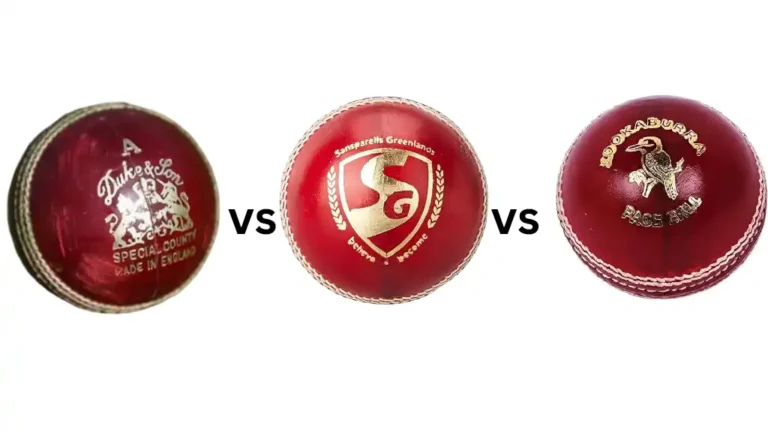
This controversy has highlighted just how important the choice of cricket ball is in Test cricket. But what exactly makes these balls different from each other? Let’s break it down.
The Dukes Ball: England’s Pride and Current Problem
The Dukes ball has been used in English cricket since the 1760s. It’s the go-to ball for county cricket and international matches in England. Here’s what makes it unique:
The Seam Story
The Dukes ball has a more prominent seam compared to other balls. This raised seam helps fast bowlers get more movement through the air and off the pitch. When the ball is new, it can swing dramatically, which is why England’s swing bowlers often look unplayable at home.
Leather Quality
The leather on a Dukes ball is specially treated to maintain its hardness for longer. This is supposed to help the ball keep its shape and provide consistent bounce throughout an innings. However, as we’ve seen in the current India vs England series, even Dukes balls can have quality issues.
Why It’s Different
The Dukes ball tends to stay harder for longer than other balls, which means it can swing and seam for more overs. This is why visiting teams often struggle in English conditions – the ball doesn’t behave the way they’re used to at home.
The SG Ball: India’s Favorite
The SG (Sanspareils Greenlands) ball is predominantly used in Indian cricket. It’s named after the company that makes it, and it behaves very differently from the Dukes.
Built for Indian Conditions
The SG ball is designed to withstand the heat and humidity of Indian conditions. The leather is treated differently, and the internal construction is tweaked to handle the subcontinent’s climate.
Seam Characteristics
The SG ball has a less prominent seam than the Dukes. This means it doesn’t swing as much, but it can still provide good movement for skilled bowlers. The seam tends to flatten out quicker than the Dukes, which is why reverse swing becomes more important in Indian conditions.
Spin-Friendly Design
One of the SG ball’s key features is how it responds to spin bowling. The leather tends to scuff up in a way that helps spinners get more grip and turn. This is one reason why spin bowling is so effective in Indian conditions.
The Kookaburra: Australia’s Choice
The Kookaburra ball is used in Australia, South Africa, and several other cricket-playing nations. It’s perhaps the most different of the three major balls.
The White Ball Connection
Kookaburra is famous for making the white balls used in limited-overs cricket. This expertise has influenced their red ball design too. The Kookaburra red ball has a different feel and behavior compared to Dukes and SG.
Seam and Swing
The Kookaburra has a flatter seam compared to the Dukes but is more prominent than many SG balls. It tends to swing for the first 10-15 overs, then becomes more of a batter’s ball. This is why you often see big scores in Australian cricket.
Durability Factor
Kookaburra balls are designed to maintain their hardness in the harsh Australian sun. They’re built to last 80 overs without becoming too soft, though they tend to lose their swing properties quicker than Dukes balls.
How These Differences Affect the Game
The choice of ball can completely change how a cricket match unfolds:
Bowling Strategies
With a Dukes ball, fast bowlers can rely on swing for longer periods. This means they can attack with fuller lengths and look for edges. With a Kookaburra, bowlers know they have a shorter window to take wickets with the new ball, so they need to be more aggressive early on.
Batting Approaches
Batters facing a Dukes ball know they need to be patient early on, as the ball will swing and seam for longer. Against a Kookaburra, they might look to capitalize once the ball stops swinging, knowing it won’t reverse swing as dramatically as an SG ball might.
Team Selection
Teams often pick different players based on the ball being used. England might play more swing bowlers at home, while teams in Australia might prefer pace bowlers who can extract bounce from the harder Kookaburra.
Why the Current Controversy Matters
The recent issues with Dukes balls in the India-England series highlight a bigger problem in cricket. When balls don’t behave as expected, it can ruin the contest between bat and ball. Players spend years learning to adapt to different ball types, and when the quality isn’t consistent, it affects the game’s integrity.
Cricket fans expect to see skills being tested fairly. When a ball goes soft after just 10 overs, it’s not testing the batters’ ability to handle swing or seam movement. Similarly, when bowlers can’t rely on the ball to maintain its properties, it becomes harder to plan bowling strategies.
The Manufacturing Side
Each of these balls is made by different companies with their own techniques and quality standards. The Dukes ball is made by British Cricket Balls Ltd, SG balls come from Sanspareils Greenlands in India, and Kookaburra balls are made by the Australian company Kookaburra Sport.
The manufacturing process involves selecting the right leather, treating it properly, and ensuring the internal cork and string are of good quality. Even small variations in these processes can lead to balls that behave differently, which is why quality control is so important.
The Bottom Line
Understanding the differences between Dukes, SG, and Kookaburra balls helps explain why cricket can look so different in different countries. Each ball type has evolved to suit its home conditions and playing style. The Dukes ball with its prominent seam suits England’s swing-friendly conditions, the SG ball handles India’s heat while helping spinners, and the Kookaburra provides consistent bounce in Australia’s hard pitches.
The current controversy in the India-England series is a reminder that even the best equipment can have quality issues. For cricket to remain the beautiful contest between bat and ball that we all love, the balls used need to be consistent and reliable. Whether it’s a Dukes, SG, or Kookaburra, each ball should give players the best chance to showcase their skills.
As cricket continues to evolve, these three ball types will likely remain central to the game’s character in their respective regions. The key is ensuring that whichever ball is used, it meets the standards that players and fans expect. After all, cricket is challenging enough without having to worry about the ball falling apart after just a few overs.