
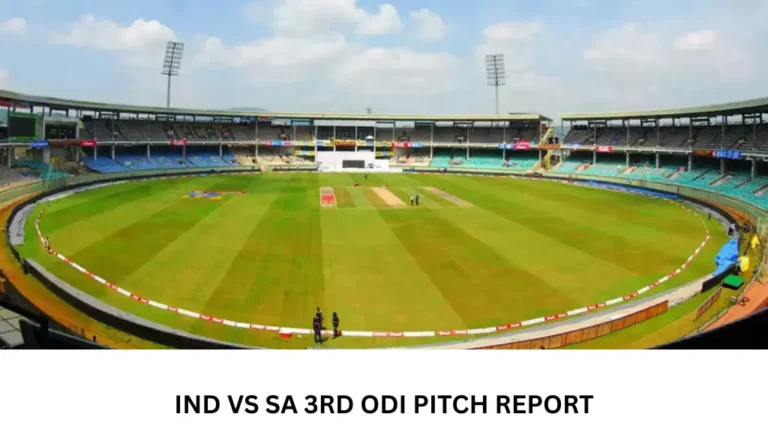
The IND vs SA 3rd ODI 2025 at the Dr. Y.S. Rajasekhara Reddy ACA-VDCA Cricket Stadium in Visakhapatnam promises another exciting contest, especially with the series level at 1-1. Known for producing balanced wickets over the years, the Vizag surface usually offers true bounce, good carry, and plenty of opportunities for batters to play their shots freely. In simple cricket terms—if batters get set, they can score big here.
Early in the innings, pacers get seam movement, especially under afternoon humidity. The new ball grips the surface enough to trouble openers, but once it softens, the pitch turns into a batting-friendly deck. Scores around 270–300 are very common on this ground, making it one of India’s more consistent ODI batting venues. Historically, the average first-innings score sits close to 260, but the wicket has also produced massive totals, including India’s 387 against the West Indies.
Also Read: India vs South Africa 3rd ODI 2025: Squads, Match Preview & Predicted Playing XI
As the match moves into the middle overs, the surface tends to slow down, bringing spinners into play. The dry patches allow bowlers like Kuldeep Yadav and Keshav Maharaj to extract turn and control the game. Batters will need to rotate strike smartly during this phase to avoid getting bogged down.
Also Read: India T20I Squad for South Africa Tour of India 2025
One of the biggest factors at Visakhapatnam is the evening dew, which has a huge impact on ODI games. The ball becomes harder to grip, spinners struggle for control, and chasing sides often gain the upper hand. This trend explains why teams winning the toss usually prefer to bowl first at the ACA-VDCA Stadium.
The fast outfield in Vizag also helps stroke players, rewarding well-timed drives and cuts. With both India and South Africa boasting strong batting lineups, fans can expect a high-scoring decider if the pitch behaves typically.
Overall, the India vs South Africa 3rd ODI pitch report suggests a surface ideal for stroke-play, with enough early help for bowlers and a significant role for dew later on. Whichever team adapts better to these conditions—especially under lights—will have the edge in this much-awaited series finale.