
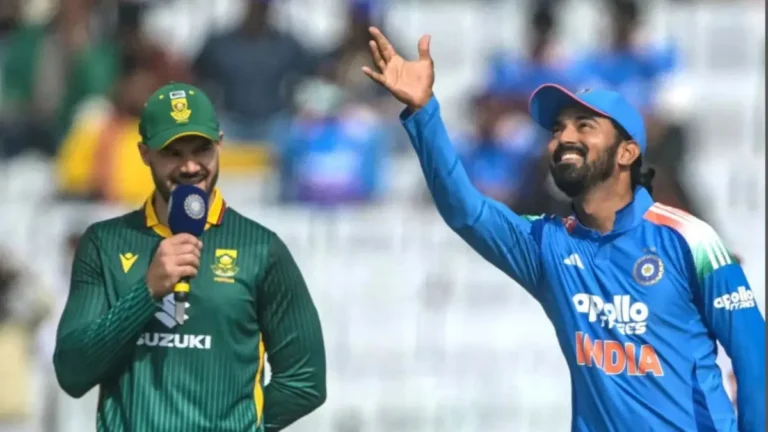
Raipur’s pitch for the second ODI is expected to assist bowlers early, especially the pacers with swing and bounce. As the match goes on, the surface generally slows down, bringing spinners into play and making batting a bit tougher. Dew in the evening could help chasing sides, so teams may prefer to bowl first. Totals in the 260–290 range are usually competitive here, making smart bowling and patient batting key to success.
Also Read:
IND vs SA 1st ODI 2025 Playing X1, Pitch Report, Weather Update, Venue Details, Head to Head
Nature of the pitch
The Raipur wicket generally offers a balanced contest between bat and ball rather than being a flat belter or a rank turner. Early on, the surface has enough firmness and bounce for fast bowlers to find carry and a hint of movement, but batters who play late and trust the bounce can still score freely in the first powerplay.
As the innings moves into the middle overs, the pitch usually slows down and the ball grips a little more. This brings both finger‑spinners and wrist‑spinners into the contest, while cutters and change‑ups from seamers become increasingly effective.
Batting vs bowling conditions
Raipur is best described as a medium‑scoring ground where discipline counts more than brute force. New‑ball bowlers can trouble top orders with swing and seam, so playing close to the body in the first few overs is important for batters. Once set, though, players who rotate strike and target the shorter boundaries straight down the ground can build substantial totals.
Because the surface does not usually produce extreme pace or extravagant turn, it rewards bowlers who hit a consistent length and vary their pace intelligently. Batters who try to hit on the up too early or across the line can find miscues easy to come by as the ball holds in the surface.
Role of dew and toss
Evening conditions in Raipur often bring a layer of dew, especially in clear, humid weather. Dew makes the ball harder to grip, reduces the amount of turn available to spinners and allows it to skid on more predictably for batters in the second innings.
For that reason, captains are likely to lean towards bowling first if they expect heavy dew, hoping to exploit any early help for seamers and then chase under easier batting conditions later. If the air feels drier and dew seems less of a factor, some teams may still back themselves to put runs on the board and apply scoreboard pressure.
Ideal first‑innings score
With limited ODI history at this venue, the sample size is small, but available evidence suggests that anything in the high 260s to around 290 should keep both teams interested. If a side reaches or crosses the 300 mark, it will almost certainly feel it has a strong grip on the game, even allowing for potential dew in the chase.
Also Read:
IND vs SA 2nd ODI 2025 Playing X1, Pitch Report, Weather Update, Venue Details, Head to Head